
Genocide survivors share stories at vigil
David Mwambari’s words echoed through Hendricks Chapel Tuesday night as a somber audience struggled to maintain its composure.
‘It was yesterday her existence was threatened. It was yesterday her children slaughtered each other. It was yesterday her son neglected her daughter, her daughter forgot her son,’ he read as students listened in silence, some holding hands to comfort one another.
Despite the snow, more than 40 students attended the remembrance ceremony led by the Student Division of Genocide Awareness. The vigil, which began at 7:30 p.m., kicked off a month of remembrance for survivors of the Rwandan genocide.
‘It was yesterday Mother Rwanda lost her million children. Yesterday she lost her pride and dignity. Yesterday her friends stood by and watched, and her enemies rejoiced. It was yesterday her rivers were flowing with blood.’
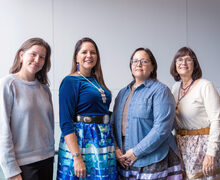
Mwambari, a Syracuse University graduate student in international relations, and Carine Umuhumuza, a sophomore at SU, are both genocide survivors from Rwanda. The two read to students on the 15th anniversary of the Rwandan genocide to remind them of the pain and hope of a struggling nation.
Sujata Ramaiah, a junior international relations and economics major, started the night by reminding students of societies’ inaction against genocide and all of the memories that still haunt those who idly watched.
Auschwitz, Cambodia, Ethiopia, Rwanda – Ramaiah told the students of how the world said ‘never again, not on our watch’ to each tragedy, only to watch similar tragedies repeat themselves.
‘Anyone can agree that genocide is bad, but so many get caught up in their day to day lives that they can’t see it,’ said Ramaiah, president of the Student Division of Genocide Awareness.
Umuhumuza and Mwambari read poems that Mwambari wrote, sharing their experiences with the audience. The students stood and joined Umuhumuza, repeating the phrase ‘light me a candle’ with her as she read through the poem. Afterward, Mwambari spoke about the human spirit and a nation still finding its way on the path to recovery.
‘Evil found a way into the children, mothers, fathers, preachers and evil had its way,’ he said.
But Mwambari’s poem is not only about death and loss; it sends a message of hope to those who find themselves in similar situations.
‘I was frustrated with the realities surrounding life, and I felt so powerless and hopeless,’ he said. ‘I wrote the poem in the middle of the night so I could sleep.’
Mwambari shared the poem with the students Tuesday night to remind them that all is not lost, even in times as confusing and painful as the genocide in Rwanda. Even though he considers himself lucky to be where he is now, Mwambari frequently returns to Africa to help children who have lost sight of their future. The poem that Umuhumuza read was a poem Mwambari wrote while he was in a refugee camp in Kenya during the country’s post-election violence in 2007.
‘I told these 12-, 13-year-old boys: ‘I’ve been here, there is hope,” he said.
As students lit the candles one by one, Mwambari and Umuhumuza stood at the front of the line, thanking students for coming. But the event was not organized solely to weep for those lost, but to help students become advocates to stop genocides of the current generation.
The humanitarian situation in Darfur grows more desperate, as Sudan expelled major foreign aid organizations from the country last month, leaving the food and water supply, and medical care of about four million citizens in Darfur up in the air.
With the conflict in Darfur escalating, Ramaiah and others encouraged students to stop the problem now, so the world will not have to weep 20 years from now as the group did for Rwanda Tuesday night.
‘There’s a Western philosophy that, ‘Oh, it’s Africa, why should we care?’ But you don’t have to go to Darfur to make a difference,’ Ramaiah said. ‘Educate yourself, educate others – the more people who know, the faster we can stop these tragedies.’
Published on April 7, 2009 at 12:00 pm