
Panelists to address environmental, political effects of Gulf oil spill
Despite the oil well being officially declared dead more than a month and a half ago, the effects of the British Petroleum oil spill will be addressed during a panel discussion Tuesday.
The panel discussion, ‘Blowout: What the Gulf of Mexico Oil Spill Means for You and the Future of American Energy,’ is organized by University Lectures and will be held at 7:30 p.m. in Hendricks Chapel. It is free and open to the public.
The panel will explain how the environmental, political and social impacts of the spill are far from over.
BP’s Deepwater Horizon oil well exploded April 20, leading to the largest oil spill in history. The spill officially ended 152 days later, after nearly five million barrels of oil had gushed in the Gulf of Mexico when the federal government declared the oil well dead.
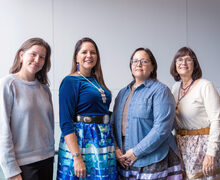
The presentation will take the form of a conversation, with much of the dialogue driven by questions from the audience. The four panelists include three Syracuse University professors and a professor from Rutgers University. Each panelist will speak briefly about the impacts of the oil spill from his or her area of expertise before addressing the audience’s questions.
The discussion aims to draw attention to the long-term implications of the oil spill that are often overlooked, according to the panelists. It is intended to educate the audience about larger issues concerning the spill that do not only affect the country environmentally.
Esther Gray, special assistant for academic affairs, said she hopes Tuesday’s event will help extend the scope of the discussion and make the topic of the oil spill more personal for the SU community.
‘We selected four people who would be able to provide a broader overview of more aspects,’ Gray said.
Because the panelists are from four different disciplines, they will be able to put the topic of the oil spill and its impacts in a wider perspective, she said.
The three panelists from SU are Kishi Animashaun Ducre, assistant professor of African American studies; Matt Huber, assistant professor of geography; and Christopher Scholz, an earth sciences professor. The fourth panelist is Lee Clarke, associate professor of sociology at Rutgers who has written books about disaster and organizational failure.
Joe Palca, an NPR science correspondent, will moderate the discussion. Palca has covered many science topics, including the Gulf oil spill.
Scholz said he plans to focus largely on the biological and environmental aspects of the spill, as well as the risks involved in oil drilling.
‘The spill is emblematic of the great risks we take as a society for sustaining our thirst for energy,’ he said.
The BP oil spill acts as a warning to those who want to partake in other forms of drilling, such as hydrofracking, a controversial method of drilling into shale for natural gas, Scholz said. He said he hopes the audience will be more aware of the risks that accompany expectations of cheap energy.
‘We face important decisions locally about future energy extraction and use, due to the potential for shale-gas exploration here in Central New York,’ Scholz said.
Ducre, who will focus on issues about environmental justice, said she thinks the topic of the Gulf oil spill is still current, although it has moved away from the media spotlight.
‘It’s completely relevant in terms of what are we willing to sacrifice in terms of our energy consumption,’ Ducre said.
She said these are decisions that will influence the lives of communities who work in the oil industry or live near oil and chemical refineries. It also affects foreign policy and how we deal with countries from which we receive oil reserves, she said.
Though the media attention has died down, Clarke said it is still important to talk about the BP oil spill to learn from it and avoid other disasters.
Clarke said public opinion on a disaster is based on how often it appears in the news. He cited the earthquake in Haiti as an example.
‘We have a very short memory after a disaster, and that’s a problem,’ he said. ‘We should be still talking about conservation. We should be talking about greater safety out in the Gulf, and I’m not sure if there’s a whole lot of that talk going on right now.’
Published on October 25, 2010 at 12:00 pm